NBA Two-Way Prop Betting UK: Market Restrictions
 Available in US
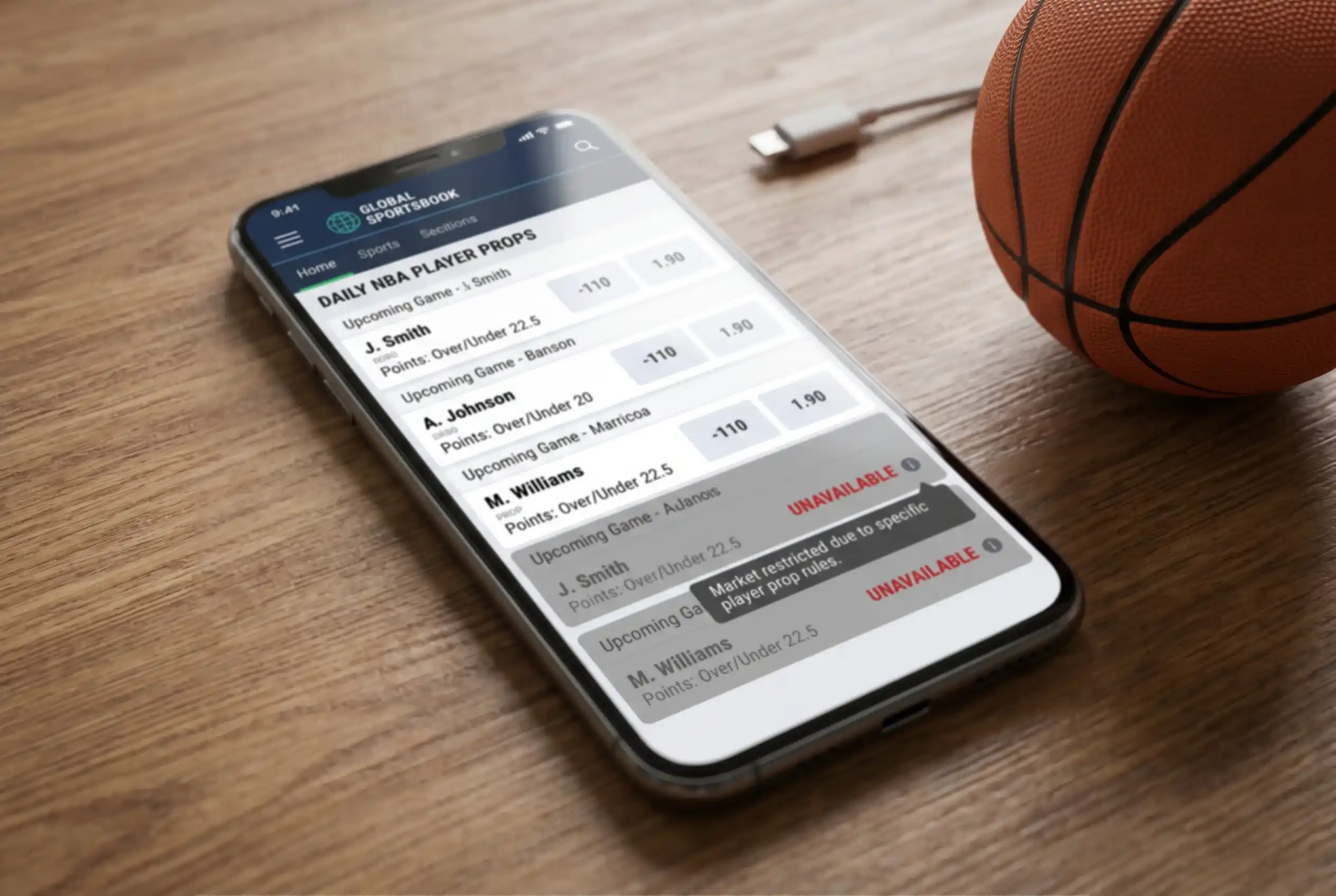
I had a points prop on a two-way contract player saved in my drafts the morning the EDNY indictments dropped in October 2025. By the afternoon, the prop had been pulled from every UK book I checked. The bet was gone. So was the entire market category – not just my one line, but every prop on every two-way player across every major UK operator. The synchronisation was striking, and within a week it became clear that this was not a temporary suspension. It was a permanent reshaping of which NBA players have prop lines at all.
The two-way prop ban is the most visible market change to come out of the 2025 scandal, and understanding it is part of how a UK NBA bettor navigates the post-October prop board. Some categories you used to bet are simply gone. Others have moved to higher minimum minutes thresholds. The market is smaller, and the markets that remain are priced more carefully than they used to be.
Defining the Impact of NBA Two-Way Contracts
The two-way contract was introduced in 2017 as a hybrid roster mechanism. A player on a two-way deal splits his time between the NBA parent club and its G-League affiliate, with limited NBA minutes per season and a salary structure that pays him for both leagues. Teams can carry up to three two-way contracts in addition to their 15-man standard roster, giving them flexibility to develop younger players or fill in for injured starters without committing to a full guaranteed deal.
The economics of two-way contracts are why the integrity risk became acute. Two-way salaries are a fraction of standard NBA salaries – typically in the £400,000 to £500,000 range for the year, compared to multi-million pound guaranteed deals for established NBA players. A player who makes £400,000 a year has less to lose financially if a bet manipulation scheme offers him a six-figure cut. The risk-reward math, from the perspective of a corrupt actor approaching the player, is more favourable than it would be for an established starter with a £20 million guaranteed contract.
The other structural risk is the limited NBA minutes. Two-way players might play 4 minutes in one game and 25 in the next, depending on injury circumstances and rotation needs. That variability makes their statistical output harder to predict, and the operators’ prop lines for them have always been wider – sometimes 6 points wide on a points prop, compared to 3 or 4 points wide for a starter. Wider lines mean less precision, which means easier manipulation if the player has any control over the relevant stat line.
For UK bettors, two-way props were never a major part of the standard prop board. They lived in the deep menu, often only on specialist operators, and the lines moved slowly. The audience for them was niche – bettors who specifically tracked G-League call-ups and the rotation patterns of developmental players. That niche is now closed.
Why Two-Way Lines Were the Soft Target
The scandal that crystallised the risk involved 34 defendants arrested across two federal indictments in October 2025, with U.S. Attorney Joseph Nocella Jr. describing the scheme as one that “exploited confidential information about National Basketball Association athletes and teams.” Four mafia families – Bonanno, Genovese, Gambino, Luchese – were named in the EDNY filings. The financial scale was, in Nocella’s words, in the “tens of millions of dollars.”
The specific mechanism that made two-way players the soft target is the asymmetry between the size of the bet and the size of the prop line. A points prop set at 4.5 for a two-way player can be manipulated by the player taking one fewer shot, or one more shot, in a 10-minute appearance. The cost to the player of doing this is essentially zero – coaches do not punish individual shot selection decisions on bench appearances – and the upside, if the corrupt actor on the other end is staking serious money, is life-changing.
The comparison to a starter’s prop makes this clearer. A starter’s points prop at 22.5 cannot be reliably manipulated by deliberate underperformance, because the player is being watched by coaches, teammates and analysts. Taking three fewer shots produces visible consequences – diminished offensive role, coaching frustration, replacement by a hungrier player. The cost of deliberately underperforming, for a starter, is high. For a two-way player on a 10-minute appearance, the cost is nothing.
Adam Silver was explicit about this in a Sports Illustrated interview after the indictments. “We’ve asked some of our partners to pull back some of the prop bets. Especially when they’re on two-way players – guys who don’t have the same stake in the competition – where it’s too easy to manipulate something that seems small and inconsequential.” That request, made publicly and reinforced through league channels, was the trigger for the synchronised removal across UK operators within a week of the indictments.
The market structure made the synchronisation efficient. Most UK operators source their prop lines from a small number of data providers, and those providers responded to the integrity threat by removing two-way player markets from their feeds. Operators who relied on those feeds had no two-way prop lines to offer even if they had wanted to. The removal cascaded automatically across the industry.
Which Markets UK Books Pulled First
The first pulls were points, rebounds, and assists props on every player listed on a two-way contract. That hit roughly 90 players league-wide and removed perhaps 400 individual prop lines per night from the broader UK prop menu. The pull happened within four days of the EDNY press conference and applied across every major UK operator I track.
The next pulls expanded to low-minute regulars on standard contracts – players who typically played fewer than 12 minutes per game. The logic was that the same manipulation vulnerability existed for any player whose statistical output had high variance and low coaching scrutiny. The threshold varied by operator, but most settled around 10 to 15 minutes per game as the minimum playing time for a player to qualify for a prop line at all.
The third pull, which happened over the following month, addressed alternate-line props on two-way and low-minute players. Even if the main prop had been removed, some operators initially kept alternate-line and “any time” prop variants in their menus. Those were tidied up in the following weeks as the implementation became more thorough.
One specific example illustrates the scope. The Trail Blazers – whose head coach Chauncey Billups was named in the scandal – had props on Terry Rozier removed entirely while his case proceeds. Rozier’s $26.6 million contract represented about 17 percent of the Heat’s cap space at the time of the indictment, and the team was subsequently obligated to send a first-round pick to Charlotte in 2027 or 2028 as part of the contractual fallout. That single situation rippled through the prop market for multiple teams.
Other operators went further, removing certain prop types entirely rather than just for specific players. Same-game prop parlays with low-stakes correlation legs were tightened. First-quarter player props with narrow lines were removed for non-stars. The cumulative effect was a noticeably thinner prop board across the UK market, with the cleaner remaining lines being more concentrated on starters and rotation regulars.
What’s Still on the Board for Role Players
The good news for UK bettors is that meaningful prop opportunities still exist for the role players who survived the threshold. Starters and rotation regulars with consistent minutes – players who play 18 to 28 minutes per game and have observable usage patterns – remain on the prop board with stable lines.
The 2025 scandal indictments described a scheme involving Rozier in particular, with specific allegations that he leaked information about his own playing readiness across at least seven NBA games between March 2023 and March 2024 – games against the Hornets, Magic, Trail Blazers, Lakers, Raptors and others – generating “tens of thousands of dollars” in profit on roughly $200,000 of staked action. That specificity is what shaped the operator response: not just removing low-stakes player props, but tightening scrutiny on any prop where the player has plausible control over the relevant stat.
What remains betable is the standard prop menu for starters: points, rebounds, assists, three-pointers made, and combo lines like points-rebounds-assists. These markets are deeper and more carefully priced than they were before the scandal. Operators have invested more in integrity monitoring on these markets, which paradoxically makes them harder to find value on – the prop lines are sharper, the margins are slightly wider, and the easy edges that used to exist on starter props with stale data feeds are mostly gone.
The new value in the prop market lives in matchup-specific situations rather than across-the-board mispricing. A starter facing a defence that has surrendered elite production at his position over the last 10 games is more likely to have a prop line that has not fully adjusted. A starter whose role has expanded after a teammate’s injury is more likely to have a prop line based on his pre-injury usage rather than his current usage. These specific situations – three to five per typical NBA night – are where the prop market still offers edge.
The other survival category is alternate lines. Even when the main prop is sharply priced, the alternate lines above and below it sometimes carry more attractive prices for bettors with a clear directional read. A starter projected at 21.5 points whose main line is 22 might have an alternate “over 24.5” at attractive odds if the operator’s algorithm has not fully priced the matchup advantage. The alternate-line market remains relatively unsophisticated even after the integrity tightening.
The New Shape of the UK Prop Menu
The prop board a UK punter sees in 2026 is noticeably thinner than the one they saw in early 2025, but it is also cleaner. The lines that exist are more carefully priced. The players on the board are observable rotation regulars whose performance is harder to manipulate. The cross-operator pricing is more consistent because the feeds are more centralised.
For a serious UK NBA bettor this is mostly a good thing. The marginal loss of the deep-bench prop menu is offset by the improved reliability of the prop market overall. The integrity protections – operator-side monitoring, league-side data sharing, regulator-side oversight – make every prop bet placed on the surviving markets more defensible. The bettor’s edge has to come from sharper handicapping rather than from finding stale lines in obscure markets, but the edge that exists is more sustainable.
The bigger story sits with the FBI’s two indictments, which laid out a timeline of suspicious activity going back two years and named co-conspirators well beyond the player and coach the headlines focused on. The full sequence of events, and how it reshaped the integrity landscape across the league, lives in my FBI investigation timeline.
Possibly, but only with significant integrity changes – likely involving higher minimum-minutes thresholds, more conservative line setting, and tighter monitoring. The current consensus across UK operators is that the risk-reward calculus does not justify offering these markets at scale, and that consensus is unlikely to shift quickly. Markets involving game officials and certain coaching-decision props have come under scrutiny. The league’s preference is for prop markets to be limited to player on-court actions where the player has visible competitive incentives to perform. Markets that depend on individual judgement calls – referee fouls, coaching challenges – are unlikely to expand and may face further restriction over time.Will two-way player props ever come back to UK sportsbooks?
Are there other prop categories at risk of similar restriction?
Prepared by the nba Betting Expert editorial staff.