FBI NBA Betting Investigation: Timeline and Market Impact
 Available in US

I remember exactly where I was on the morning of 23 October 2025. I had a coffee in one hand, an open UK sportsbook tab on my laptop, and I was about to fire a Heat prop when my phone lit up with the news alert. Federal indictments. Multiple NBA figures. Mafia involvement. Within an hour the prop I had been about to bet was suspended, then voided, then replaced by a completely different market structure that has not gone back to what it was before.
The federal investigation that ripped through the NBA’s betting infrastructure in October 2025 is the single most consequential event in this sport’s recent gambling history. For UK punters, understanding how it unfolded is not optional context. It explains why the prop market looks the way it does in 2026, why operators behave more cautiously than they did two seasons ago, and why integrity monitoring has gone from background machinery to a visible feature of the experience.
Analyzing the 2025 NBA Betting Indictments
The morning of 23 October 2025 produced two separate but coordinated federal cases out of the Eastern District of New York. The first targeted a sports-betting scheme that allegedly used inside information to manipulate NBA player prop markets. The second targeted a rigged-poker operation that prosecutors said involved organised crime families and a separate ring of co-conspirators. Together, the two indictments named 34 defendants. Among them were former NBA player Damon Jones, Portland Trail Blazers head coach Chauncey Billups and Miami Heat guard Terry Rozier.
U.S. Attorney Joseph Nocella Jr. described the cases as one of the most brazen sports-corruption schemes prosecutors had seen in modern federal sports-betting enforcement. The poker-side indictment named alleged participants from all four traditional New York mafia families – Bonanno, Genovese, Gambino and Luchese – a detail that distinguished this case from earlier point-shaving scandals and signalled that the criminal infrastructure underneath the betting fraud was structurally serious, not opportunistic.
The Rozier portion of the indictment focused on a specific 2023 game where prosecutors alleged he conspired to underperform statistical thresholds on player props. The arithmetic was direct enough to follow. He had recently signed a contract worth $26.6 million guaranteed, and the alleged scheme generated profits for a network of bettors who knew his planned underperformance in advance. The defendants have pleaded not guilty; the cases continue through the federal system. What is not in dispute is that the indictments triggered an immediate operational response from the league, from regulators, and from sportsbooks.
How the Scheme Allegedly Worked
The shape of the alleged scheme is what makes it sit so heavily in every bettor’s head. The mechanics, as laid out by prosecutors, were not about fixing the outcome of a game. They were about manipulating the prop markets that sit alongside the outcome.
A player prop – over or under on points, assists, rebounds, three-pointers – has a binary settlement. The player either clears the line or does not. If you know in advance that a player will sit out early, foul out intentionally, or simply not pursue his usual statistical output, you can bet the under with near-certainty. The under does not require the team to lose; it does not require the game to be close; it only requires one cooperative player to deliver a single statistical outcome.
The reason this market structure was vulnerable is that prop margins are wider than spread margins, the bet sizes are smaller, and the surveillance infrastructure was less mature. A $20,000 series of co-ordinated bets on one player’s underperformance, distributed across multiple accounts and operators, can clear without triggering the kind of pattern recognition that a $100,000 spread bet on the same game would trigger immediately. The scheme exploited that gap.
It also exploited the wide proliferation of accounts in regulated markets and the use of straw bettors who placed wagers on behalf of the principals. The federal complaint described layered account networks that fed information from the inside to the outside, with profits cycled back through the broader criminal structure. None of this is the kind of activity that exists in the average UK punter’s betting life, but its existence at the top of the market has reshaped the rules everyone else operates under.
The League’s Operational Response
Adam Silver addressed the scandal publicly within days of the indictments. His description – that the news produced a pit in his stomach – was unusually candid for a commissioner who usually defaults to measured statements. The operational response was equally direct.
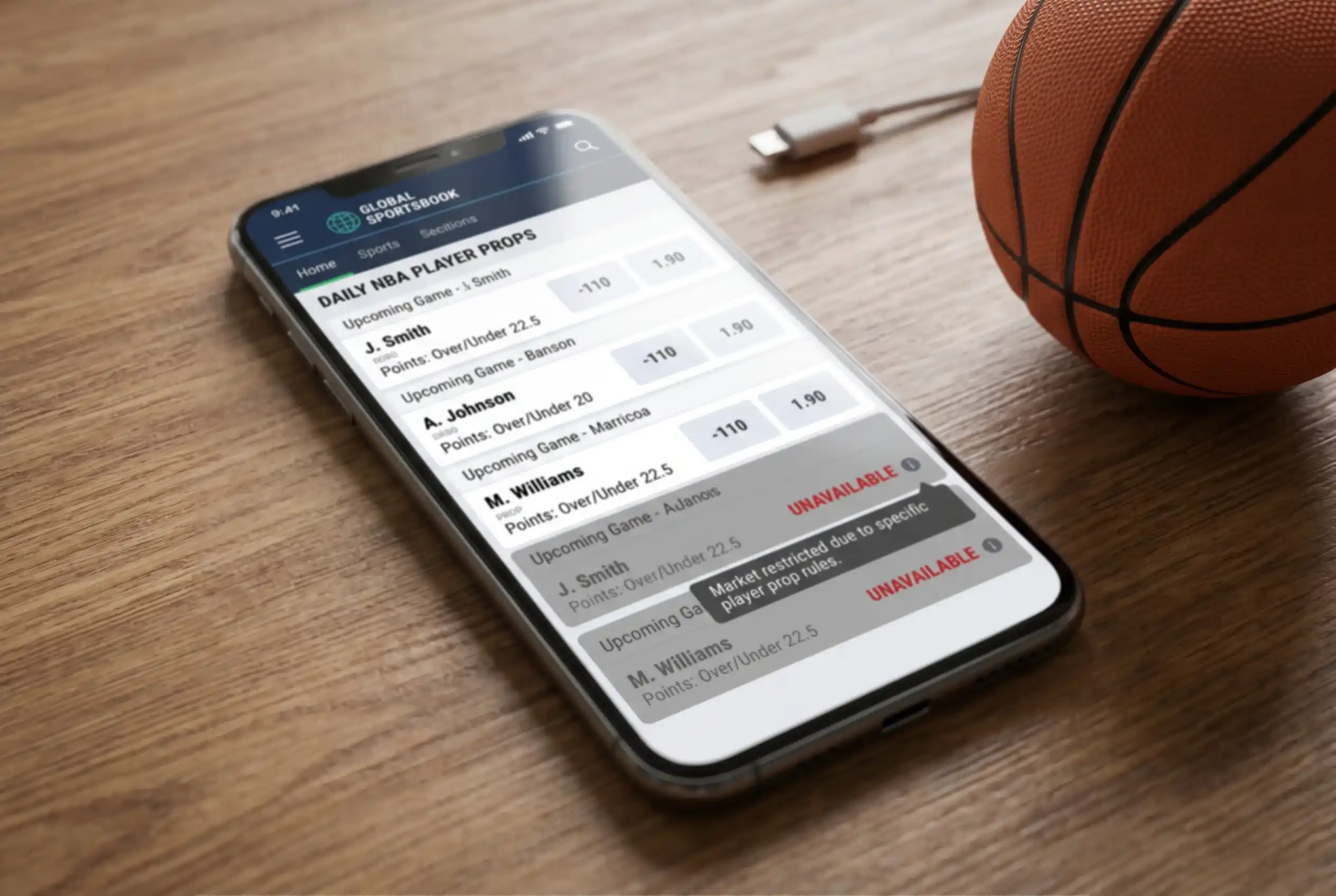
Within weeks, the league had asked its betting partners to pull back prop offerings on the most vulnerable categories. Two-way players – those on hybrid G League contracts whose financial stakes are smaller and whose game-to-game minutes are more variable – had their prop markets restricted across most operators. Player-specific prop categories that involved smaller statistical thresholds, where a single missed shot or extra foul could flip the outcome, were reviewed and in many cases narrowed or removed.
The integrity monitoring infrastructure also accelerated. UK-licensed operators in particular tightened their unusual-pattern detection on NBA props, with statistical thresholds that would have been considered intrusive a year earlier becoming standard practice. The Gambling Commission, which oversees the UK market, has been public about expecting operators to share suspicious-activity data more aggressively across the industry, and integrity reporting around NBA games specifically saw a measurable uptick through the back half of 2025 into 2026.
For the UK punter, the most visible effect was the disappearance of certain prop markets and the appearance of new caveats on others. Markets that had been priced casually for years – alternate three-point lines on bench players, free-throw attempts for limited-minute role players, defensive statistics that depended on a single rebound or steal – either vanished entirely or had their limits cut sharply.
How the Betting Market Has Changed
The structural changes in the market since October 2025 fall into three buckets, and each of them touches every UK bettor whether they realise it or not.
The first is the prop board itself. The number of available player props on an average NBA game card has shrunk meaningfully. Where a major operator might have offered 80 props per game in early 2025, the same operator now offers closer to 55. The depth of the alternate-line market – over 8.5 rebounds, over 9.5, over 10.5 and so on – has been compressed. Some of those alternates remain available; others have been consolidated into a single main line plus one or two alternates. The cleaner trades are still there, but the breadth of choice has narrowed.
The second is account-level monitoring. Operators have increased the sensitivity of their pattern detection on NBA prop volume. A bettor who fires consistently on under props for the same handful of players, even in markets that look perfectly legitimate, is more likely to draw a manual account review than they would have been two years ago. None of this is unreasonable from the operator’s perspective – the regulator expects it – but it does mean that prop-heavy NBA strategies now operate against a backdrop of more visible scrutiny.
The third is the pricing discipline on the props that remain. With volume concentrated on fewer markets, the books have invested more in pricing accuracy. The casual mispricings that existed in 2024 – prop lines that lagged a player’s recent form by three or four games – are rarer. The market has tightened, the margin has been protected, and the edge available to a casual prop bettor has compressed alongside it. Serious bettors who relied on prop edges have had to migrate toward team-level markets, totals, and live betting, where the structural opportunities have not contracted to the same degree.
Live or in-play wagers now account for somewhere between 52 and 60 percent of all sports-betting handle in mature European markets, and that share has only grown since the scandal pushed casual prop money sideways into other markets.
What This Means for UK Punters in 2026
The post-scandal NBA betting landscape is not worse for the disciplined bettor. In some ways it is cleaner. The book that posts a 1.91 line on a player prop today has thought about that line harder than they would have in 2024, and the integrity infrastructure that surrounds the bet has expanded.
What has changed is the cost of casual carelessness. A bettor who used to throw twenty random prop slips at a Wednesday-night NBA card is more likely to encounter restricted limits, voided markets, and the occasional account review. A bettor who treats prop selection as a serious analytical exercise – backing reads with usage data, minutes projections, and matchup-specific reasoning – is largely unaffected by the operational changes and arguably better served by the tighter pricing standards.
The broader effect on the legitimacy of the sport in betting markets is harder to measure. UK NBA viewership has grown significantly in the same period – Sky Sports saw 40 percent growth in NBA audience numbers, and Prime Video Europe’s NBA package has expanded against the backdrop of Alex Green’s note that there is exceptional demand for NBA content across the continent. Whether that growth holds if a second scandal emerges, or what happens if any of the named defendants are convicted at trial, are open questions. For now, the betting market has absorbed the shock and the sport remains comfortably the most popular non-football betting product in the UK during the NBA season.
The next layer to understand is how the UK Gambling Commission and operators have built integrity-monitoring infrastructure in response, and where that infrastructure sits relative to the league’s own surveillance. I have written through that architecture in detail in the integrity monitoring piece.
Where the Cases Stand Now
As of early 2026, the federal cases are still working their way through the courts. None of the defendants have been convicted. Most have pleaded not guilty and continue to await trial or plea negotiation. The legal calendar for cases of this complexity typically stretches over years, and the eventual outcomes – whether convictions, acquittals, or plea agreements – will shape the next round of regulatory and operational responses.
What is already established is the precedent. The federal government has shown both the appetite and the resources to pursue NBA-adjacent betting fraud at a scale that did not exist a decade ago. Every operator and every regulator has now seen the playbook. The market that emerges from this multi-year legal process will be different from the one that existed before October 2025, regardless of the specific verdicts.
Yes – the operational changes since October 2025 have if anything made the legitimate prop markets more secure. The categories most vulnerable to manipulation have been restricted or removed, and the integrity monitoring around what remains is more aggressive than it was two years ago. The most visible impact has been on prop markets rather than spreads or totals. Line movement on the main game markets is broadly similar to pre-scandal patterns. The prop board has fewer lines, tighter pricing, and lower limits on the categories that remain available. The infrastructure to detect and prevent a repeat has been substantially upgraded. A scheme of the same shape – inside information about player underperformance traded for prop profits – would now trigger surveillance flags significantly faster than the October 2025 scheme did. Smaller-scale individual fraud remains possible, but the coordinated structural variant is harder to execute.Are NBA prop markets still safe to bet on as a UK punter?
Will the scandal affect line movement on NBA games in 2026?
How likely is another scandal of this scale?
Published by the nba Betting Expert team.