NBA Teaser Bets UK: Structured Parlay Strategies
 Available in US
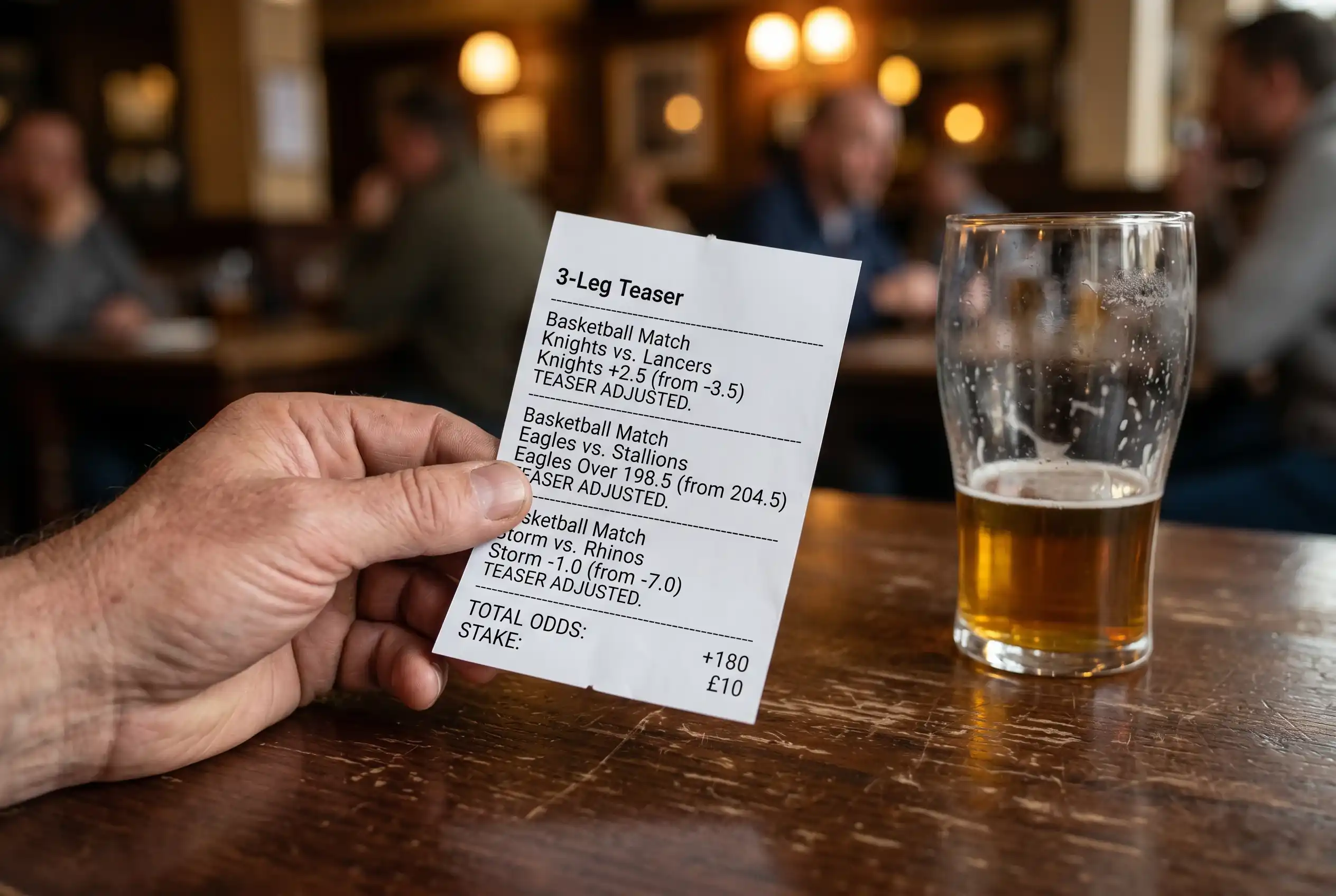
The first teaser I ever placed was on a friend’s recommendation in late 2019. He had been winning on six-point NBA teasers for two seasons and he made the product sound like a hack – you get six points across multiple games at a cheaper price than the equivalent parlay. I built a three-team teaser, won two of three legs, and lost the entire stake. That bet taught me what every American bettor learns early and most UK punters never have to learn at all: teasers are parlays. They lose all-or-nothing. The six points buys you better individual win rates, but the structure can still ruin you.
The teaser is a product UK sportsbooks have imported from the American market. It is built around US sports, primarily NFL and NBA, and it does not have the cultural footprint of an English football accumulator. For the UK punter willing to learn the structure, teasers offer a specific kind of edge in NBA betting that is harder to access through any other product – if and only if you can read the math behind them properly.
Calculating Odds and Pricing for NBA Teasers
A teaser is a multi-leg parlay where each leg has been moved a fixed number of points in your favour. The most common NBA teaser is the six-point teaser, which moves every leg six points toward your preferred side. The price you pay for this points adjustment is a substantially lower payout than the equivalent untouched parlay would offer.
An example. Three NBA games, each with the favourite at -7.5. A regular three-team parlay backing all three favourites at -7.5, priced around 1.91 per leg, would pay roughly 6.96 if every leg landed. A six-point teaser on the same three games would move each favourite from -7.5 to -1.5, dramatically improving the probability of each leg landing, and would typically be priced around 1.80 – a price the book has calibrated to reflect the cumulative probability adjustment.
The key insight is that the points adjustment is uniform across all legs in the same teaser. You cannot mix-and-match different point adjustments within a single teaser slip. The choice you make at the start – six points, six-and-a-half points, seven points – applies to every leg you add. UK operators that offer teasers typically structure them in 6, 6.5, and 7-point varieties, with the price decreasing as the points adjustment grows.
The book prices the teaser based on its model of the probability distribution of each leg’s outcome and the cumulative impact of the points adjustment. This is not a generous product by default – the book has run the math, and the headline price reflects their estimate of fair value plus their margin. The art of the teaser is identifying the specific NBA legs where their model has under-adjusted relative to your read.
The Wong Teaser and Why It Mattered
The most famous teaser strategy in modern sports betting comes from Stanford Wong, who identified that NFL teasers crossing the key numbers of 3 and 7 had historically been profitable for the bettor because the underlying margin distribution clustered around those numbers. The same logic, applied loosely, transfers to NBA teasers – but the cluster numbers are different.
In NBA games, the margin distribution clusters most heavily around 3 and 7 points, similar to NFL but with different relative frequencies. Roughly 9 to 11 percent of NBA games land on a margin of exactly 3 points, and roughly 5 to 6 percent on exactly 7 points. A six-point teaser that crosses both 3 and 7 captures meaningful probability mass that the book’s standard pricing model may not fully reflect.
The specific NBA teaser legs that historically offer the most value are favourites in the -7.5 to -8.5 range moved through 3, and underdogs in the +1.5 to +2.5 range moved through 7. The first scenario takes a near-touchdown favourite and turns them into a small favourite, picking up the +3.5 to +3.5 range that includes the most common winning margin. The second scenario takes a small underdog and turns them into a moderate underdog, picking up the +7.5 to +8.5 range that includes the second-most-common margin.
The catch is that the book has had decades to study this pattern and the margins on standard six-point NBA teasers have widened to compensate. The historical edge is not what it was in the early 2010s. What remains is the specific identification of legs where the book’s pricing has lagged the genuine probability distribution, which requires the same back-solve discipline as every other multi-leg product.
The most common winning margins in NBA history concentrate below 10 points, with 3 and 7 doing the heaviest work. Any teaser that does not cross at least one of those key numbers is losing structural value, regardless of how favourable the points adjustment looks on the headline.
How to Evaluate a Teaser’s Math
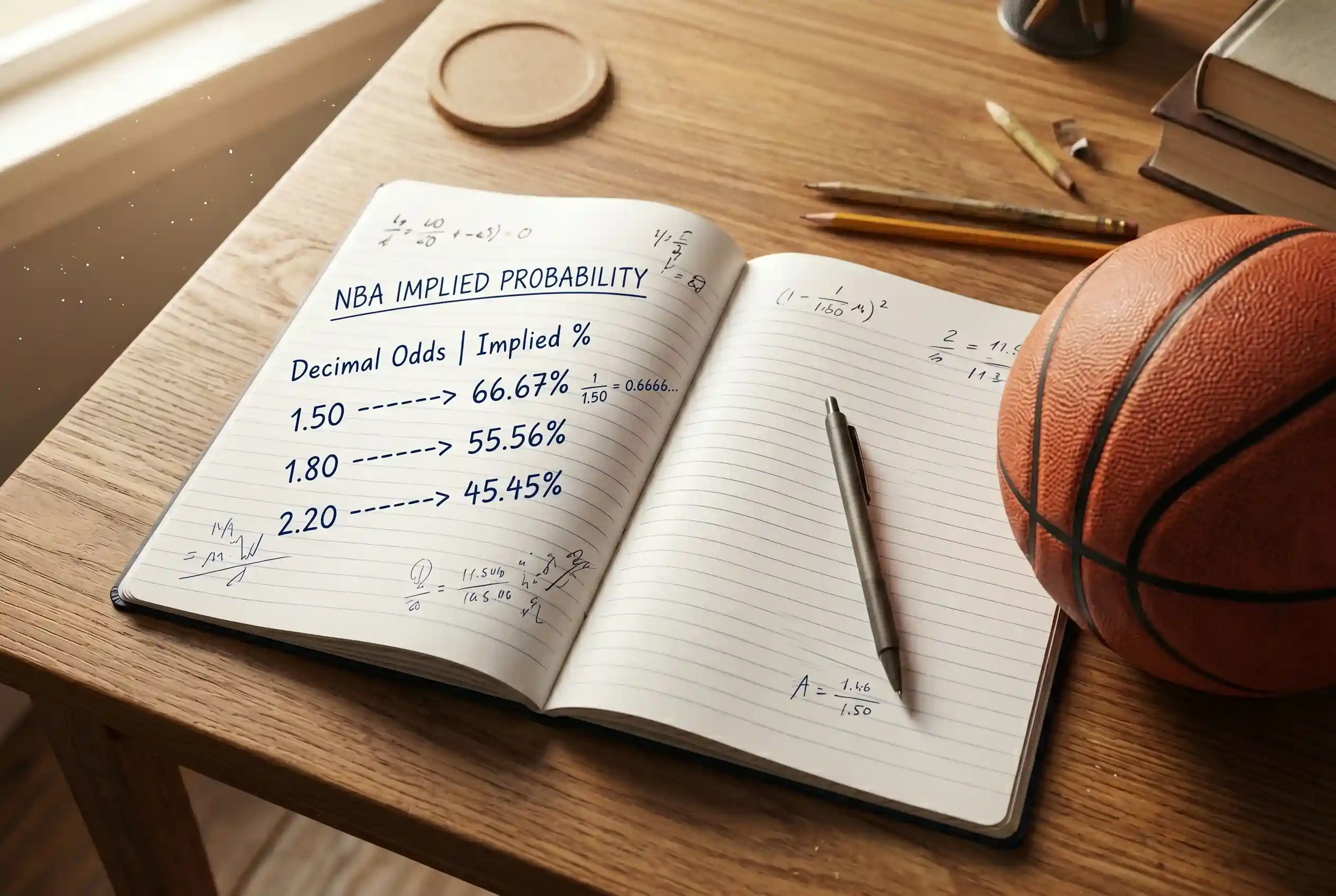
The evaluation framework for a teaser is identical to a parlay back-solve. Estimate the probability of each leg landing at its teased number, multiply the probabilities (ignoring correlation since teaser legs are usually from different games), compare the joint probability to the price the book offers, and compute the residual margin.
An example with three legs. Bucks -7.5 (suppose this represents a 50 percent implied probability of covering, so at -1.5 it might cover 65 percent of the time after the six-point teaser). Celtics -2.5 (about 56 percent at -2.5, becoming roughly 71 percent at +3.5). Heat +5.5 (about 47 percent at +5.5, becoming roughly 63 percent at +11.5). Multiplying the post-teaser probabilities: 0.65 * 0.71 * 0.63 = 0.2907, or 29.07 percent.
If the book offers the three-team six-point teaser at 1.80, the implied probability of that price is 1 / 1.80 = 55.56 percent. The teaser asks the bettor to pay a price implying a 55.56 percent probability for an outcome estimated at 29.07 percent probability – a substantial mispricing in the book’s favour. That gap is roughly 26.5 percentage points of margin, or an effective book edge near 47 percent. The book offers worse expected value on the teaser than on the underlying single bets.
The numbers above are illustrative rather than typical, but they make the point: teasers structured at six points on three legs almost never offer positive expected value at the standard prices UK operators publish. The casual punter sees the points adjustment and assumes they have gained an edge; the math says they have paid for the adjustment with a much wider margin.
The exception is the carefully selected two-team teaser on legs where the book has under-priced the probability shift. A two-leg teaser at six points on the right key numbers can occasionally produce positive expected value, but the cases are narrow and require the careful identification of legs where the line and the cross numbers align. Most UK NBA teasers are losing bets in expectation, dressed up to look like winning ones.
Where the Teaser Product Genuinely Wins
The honest analytical position is that teasers are a higher-margin product than the standard parlay, dressed up to look like a more attractive one. They survive in the UK market because the headline points adjustment is psychologically compelling and the math is opaque to the casual punter.
The narrow edge cases where teasers do win are worth knowing about even if they appear rarely. The first is the two-leg six-point teaser where both legs cross either 3 or 7. If you have a strong read on two specific NBA games where the favourites sit at -7.5 to -8.5 and your six-point teaser drops them to -1.5 to -2.5, the joint probability of both legs landing at the teased number can occasionally exceed the implied probability of the offered price. This requires both legs to have favourable matchups in their own right – the teaser does not save a bad pick, it amplifies a good one.
The second narrow case is the alternate-points teaser product some UK operators offer, where the points adjustment is custom rather than fixed. These work like alternate lines combined into a parlay with the points already baked in, and the pricing logic is slightly more flexible. The book is still applying margin, but the per-leg adjustment can be smaller and the cumulative compression therefore lighter. When available, these tend to be the better value teaser products.
The third case is the teaser as a hedge structure rather than a primary bet. A bettor who has fired a sharp side at the full main line and wants to lock in a partial win regardless of the final margin can use a teaser on the opposite side to construct a near-symmetric payoff. This is a sophisticated use of the product and not the way it is marketed, but it is a structurally legitimate one for the UK bettor who has the bankroll to size both bets meaningfully.
Mobile betting represents roughly 78 percent of online wagering volume globally, and the teaser product on mobile is heavily marketed because the points adjustment is easy to communicate in a small space. The volume that flows through the product is the engine that funds the operator’s marketing of it, which is the structural reason it persists in the UK market despite its mathematical disadvantages for the average punter.
Why Most UK Punters Should Skip Teasers Entirely
This is going to read as harsh advice, but it is the honest analytical conclusion after nine years of watching this product in the UK market. The average UK NBA bettor who places a teaser is doing so because the product looks like a discount and feels like a strategy. The math, examined honestly, says it is neither.
The casual three-leg or four-leg six-point NBA teaser carries effective margins that dwarf the standard parlay margin, and the standard parlay margin is already worse than the single-bet margin. A bettor who places six teasers a week through an NBA season is paying margin on every leg, on every combination, and on the structural points adjustment, and the cumulative cost across 200+ teasers in a season exceeds what almost any handicapping edge can overcome.
The bettors who win on teasers do so because they have isolated the narrow profitable cases, sized them appropriately, and ignored the headline-marketed standard teaser products entirely. This is a meaningful body of work for what amounts to a small portion of a season’s NBA bankroll. For most UK punters, that bankroll generates better expected returns deployed in single bets, well-chosen same-game parlays, and selective alternate lines.
The product I would point a serious bettor toward as a higher-leverage use of capital is the futures market, where the time horizon is longer and the analytical work has more time to pay off. The structure and pricing logic of NBA futures is its own subject, and I have written through the architecture in my futures betting piece next.
When the Six-Point Number Earns Its Place
The discipline I have settled into with teasers is to evaluate them as I would any other multi-leg bet: independent legs, joint probability estimate, margin awareness. The result, ninety-five percent of the time, is that the teaser fails the test and I bet the underlying legs separately or skip them entirely. The five percent of the time the teaser passes, the legs share specific structural conditions – favourites at the right number, key-number crossings on both sides, matchup specifics that support the joint outcome – and the product is genuinely useful.
Treated this way, teasers earn their place in the toolkit. Treated as a default product, they are one of the most efficient ways to convert a punter’s bankroll into operator revenue in the UK NBA market.
The headline points adjustment is genuinely valuable, but the book has priced it carefully. A six-point teaser typically carries an effective margin two to three times wider than the underlying single bets, because the book has compressed the price further than the cumulative probability shift would naively suggest. Casual bettors see the points and assume value; the math behind the price is what determines whether value actually exists. Most UK operators allow cross-sport teasers, but the points adjustment becomes less meaningful when the legs come from sports with different margin distributions. The cleanest analytical case for teasers is single-sport NBA where the key numbers of 3 and 7 do the heavy work. Mixing in football or NFL legs muddies the math without typically improving the price.Why are six-point teasers so much more expensive than they look?
Can I build a teaser combining NBA and other sports?
Created by the ”nba Betting Expert” editorial team.