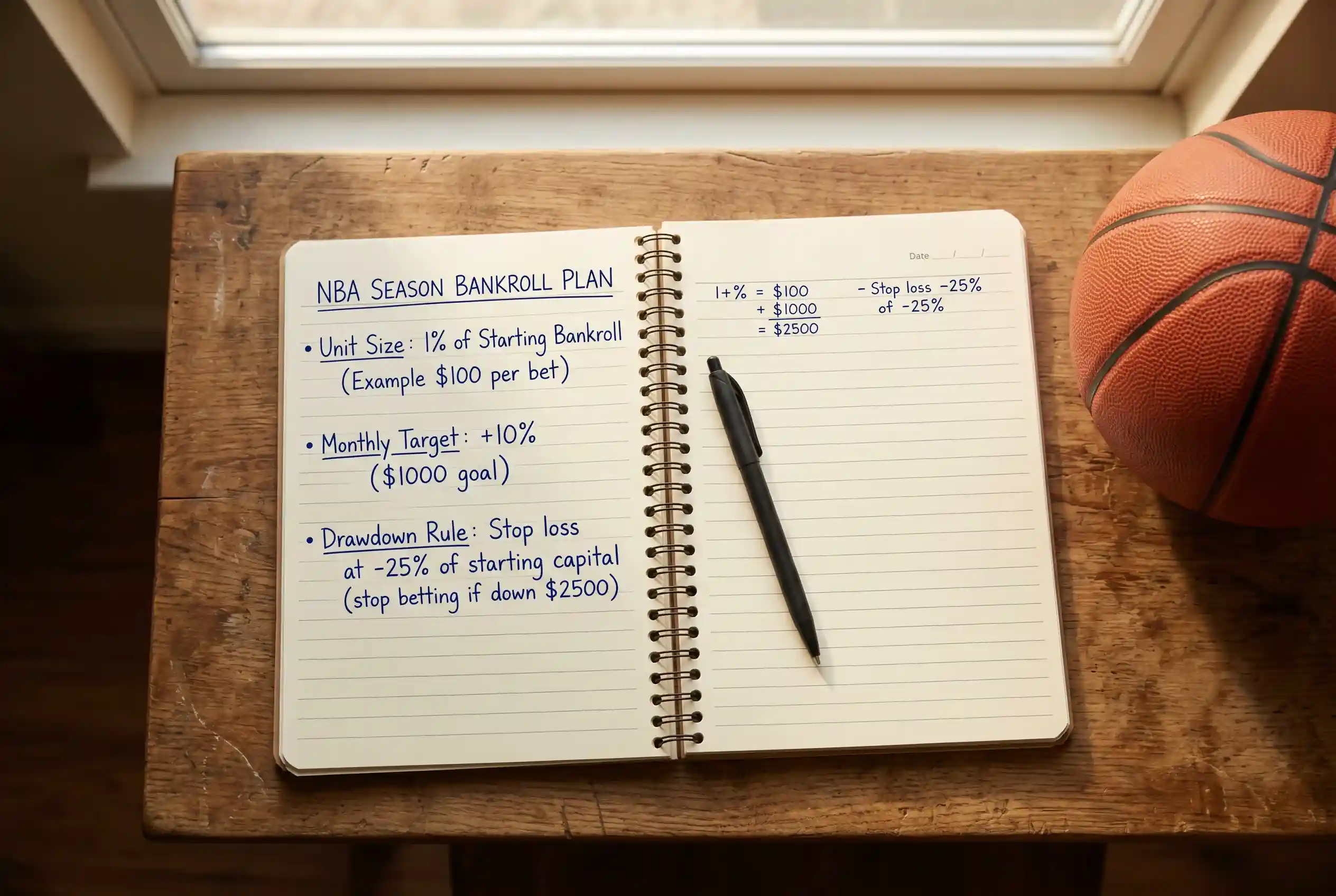
NBA Decimal Odds UK: Calculating Betting Payouts
 Available in US
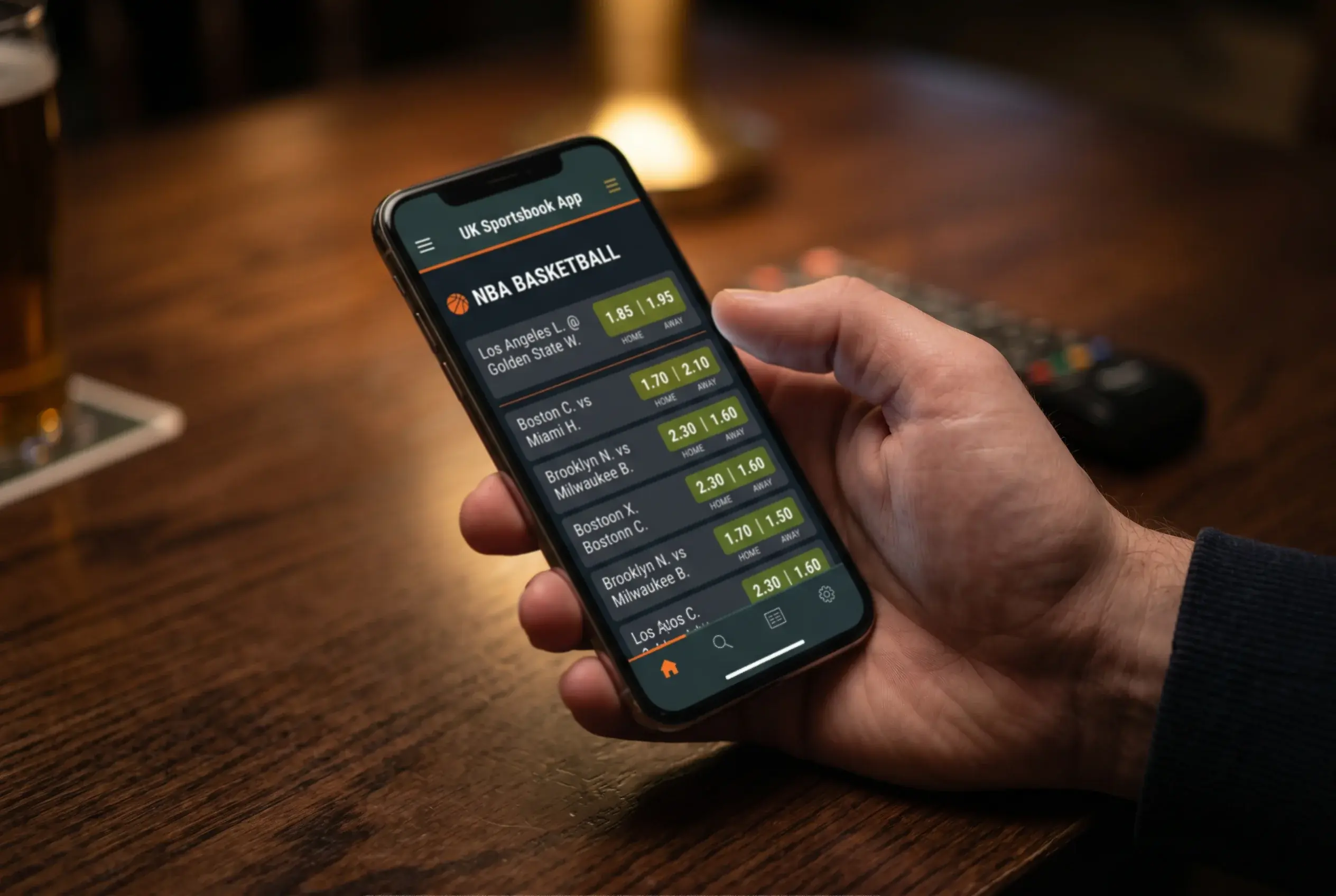
The first time I tried to explain a 1.91 price to a friend who only knew football coupons, he stared at me as if I had quoted him a tax band. That little number – flat, dry, sitting next to a Lakers logo – is the single most useful piece of information on any UK NBA betting screen. It tells you exactly how much you get back, exactly what the bookmaker thinks of the matchup, and exactly what the house is charging you to be there.
Decimal is the default in the UK because it makes the math obvious. Stake times price equals the total return, full stop. American formats with their pluses and minuses, and the old fractional 5/4s, ask you to do extra work for the same answer. With NBA games landing in your evening at 1.85, 2.10, 3.50 and the rest, you want a number that behaves like a calculator, not a riddle.
Once you are comfortable reading the prices, use an implied probability calculator to quickly determine the true break-even point of your wager.
Interpreting Decimal Odds and Potential Payouts
Pull up any UK sportsbook on a Tuesday night NBA card and you will see a price like 1.85 next to the Celtics moneyline. That number is your total return per pound staked, including your stake back. Bet £10 at 1.85, win the bet, and £18.50 lands in your account. Profit is £8.50; the other £10 is the stake you risked, which is now home.
This is the trap UK punters used to hit when sportsbooks still defaulted to fractional. A 4/5 fractional price means £4 of profit for every £5 risked, total return £9. The decimal equivalent is 1.80. The fractional makes you think about profit; the decimal makes you think about return. For NBA, where you are likely to bet a basket of small markets across a card of ten games, the decimal frame keeps your head clear.
One more nuance. Decimal prices have no neutral middle. A coin flip is 2.00. Anything below 2.00 means the bookmaker rates the outcome as more likely than 50 percent. Anything above means less likely. Once that anchor clicks, every NBA line reads like a one-glance probability check.
From Decimal to Implied Probability in One Division
This is the trick that promoted me from casual punter to someone who actually checks if a bet is worth taking. The formula is one divided by the decimal price. That is it. 1 / 1.85 = 0.5405, or 54.05 percent. That is the implied probability – the chance the bookmaker is pricing the outcome at, before you account for their margin.
Run it on a few NBA examples and you will start to feel the prices. A 1.50 favourite is priced at 66.67 percent. A 1.91 line, which UK books love because it neatly disguises the standard US -110, sits at 52.36 percent. A 3.50 underdog is priced at 28.57 percent. Memorise three or four of these and the screen starts narrating itself.
The reason this matters: you cannot find value without a view of probability. If a UK book is offering 2.10 on a Nuggets home win and your read is that they should be closer to 55 percent – implied probability 47.62 – you are looking at a potential edge. Without the division, every price is just a number you stare at. With it, every price is a percentage you can argue with.
I do this conversion in my head dozens of times a night during the regular season. It takes two seconds once you have done it a hundred times. And it is the difference between betting a “good price” because the screen looks generous and betting a good price because the math agrees.
Decimal vs Fractional: Why UK Sportsbooks Default to Decimal
Walk into a betting shop on Tottenham Court Road in 2010 and the board would have shown you 5/4, 11/10, 6/4, 9/2. Open the same shop’s app in 2026 and decimal sits as the default toggle. The reason is partly the broader online shift – mobile betting now accounts for 78 percent of online wagering globally, and decimal renders cleaner on a small screen than a stack of slashes.
The maths is the real driver. Fractional became standard when bets were placed verbally over a counter and the focus was on what you would win on top of your stake. A decimal price answers the modern question – what comes back into my account – without any extra step. For multi-leg bets it is especially clean: multiply the decimals together and you have the price of the accumulator. Fractionals require conversion to decimal anyway to multiply, so most books skip the step and show the result.
If you still see a fractional toggle on your UK book, here is the quick conversion: numerator divided by denominator, plus one. So 5/4 becomes 1.25 + 1 = 2.25. 11/10 becomes 1.10 + 1 = 2.10. The plus-one is what separates “profit only” from “total return.” Once you spot it, you can read either format, but I would not recommend flipping back and forth. Pick decimal and stay there.
The Hidden Vig in Every NBA Line
Here is what the bookmaker is doing while you stare at 1.91 on both sides of an NBA spread. They have priced both outcomes at 52.36 percent implied probability. Add those together: 104.72 percent. The market cannot actually contain more than 100 percent of possible outcomes, so that extra 4.72 percent is the house margin – the vig, the juice, the overround.
Every single NBA bet you place carries a margin. On a tight two-way market like a spread you are typically looking at 4 to 5 percent. On player props it can be 6 to 8 percent. On exotic markets like first-quarter winner with a tie option, the margin can climb above 10 percent. The headline 1.91 looks innocent until you stack three of them into a same-game parlay and the cumulative juice quietly devours your edge.
The way out of this is line shopping and devigging. Compare the same line across three or four UK-licensed books – UK remote casino, betting and bingo together generated £7.8 billion in gross gambling yield in the most recent reporting year, and that money funds a price war that you can exploit. The book offering 1.95 on the same side that another offers at 1.85 is leaving five pence per pound of margin on the table. Find it consistently and you have already done half the work of value betting.
You can also remove the vig from any two-way market with simple algebra: divide each implied probability by the sum of the two. On that 1.91 / 1.91 spread, both sides devig to exactly 50.00 percent. That is the market’s true read of the game, stripped of the bookmaker’s commission. The further your personal projection sits from that no-vig fair value, the more honest your edge claim becomes. For a more granular walkthrough of converting decimal to a clean percentage, I would point you to the implied probability guide next.
Build a solid foundation for your wagering journey with the ultimate UK guide to NBA betting.
Putting the Number to Work on a Wednesday Night
The decimal price is not a thing to admire. It is a tool to interrogate. Every time you see one on an NBA line, run the one-over-price calculation in your head, compare it to where you think the matchup should land, and only then decide whether the bet exists. Most of the time it will not, and that is fine – selectivity is what separates a UK NBA bettor with a season-long edge from a punter who churns through a slip every night.
The number is also a sanity check on your own discipline. If you cannot articulate why 1.85 is wrong or 2.40 is right, the bet has no business on your slip. Decimal odds make that articulation cheap to do and impossible to fake.
A handful of long-established UK operators keep fractional as a legacy default for traditional punters who learned on horse racing. Every one of them lets you toggle to decimal in account settings, and for NBA – where multi-leg slips and prop maths dominate – decimal is the format the rest of the betting market has standardised on. A genuine coin flip is 2.00. Once you see 1.91 on both sides, the bookmaker has baked in roughly 4.7 percent margin, so neither price is fair – both are slightly worse than the true 50 percent probability would suggest. The no-vig fair line on that pair is 2.00 each, which is what you should compare your own projection against.Why do some UK sites still show fractional odds for NBA?
What is a fair decimal price on a 50/50 NBA matchup?
Written by the editors at nba Betting Expert.