NBA Quarter Betting UK: Spreads and Totals Strategy
 Available in US
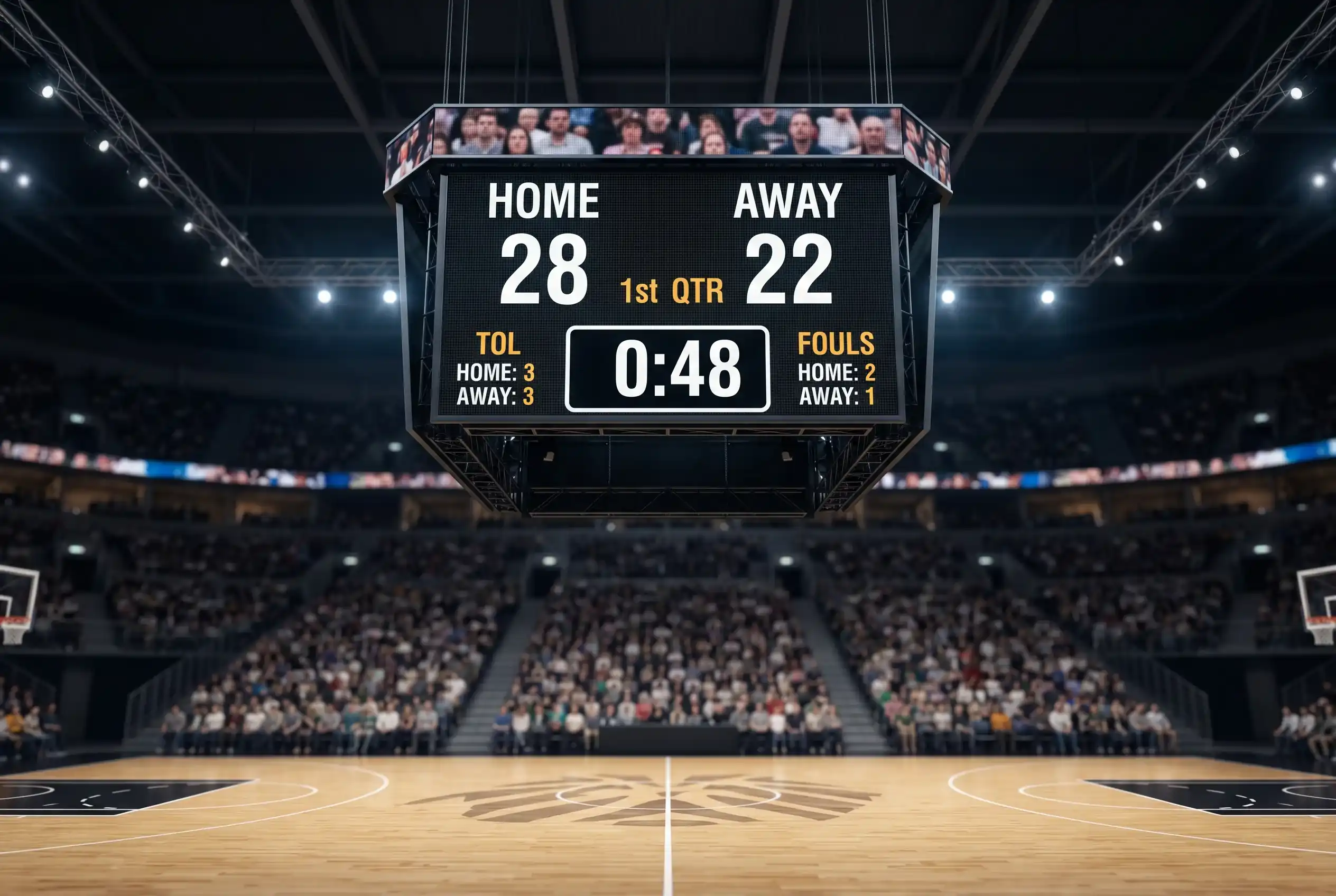
The first time I made a sustained profit from quarter betting was during a stretch in February 2024 when I started ignoring full-game spreads on poorly-matched teams and instead focused on first-quarter lines for games where I had a clear read on which side would come out hot. Twenty-one games over three weeks, fourteen winners. The full-game spreads on those same games were a coin flip – but the first quarter, where the starting units played roughly the same eight to ten minutes regardless of garbage time, behaved much more predictably.
Quarter betting isolates a single 12-minute slice of an NBA game, and that compression has consequences for how the market prices it. Rotation patterns matter more. Star availability matters more. Pace matters more. The full-game total can absorb a slow first quarter with a fast second; the first-quarter total cannot. That asymmetry is what creates the edges that punters who specialise in quarter markets keep grinding profitably.
Overview of Available NBA Quarter Betting Markets
The standard UK NBA quarter menu has expanded considerably since the live-betting boom. Walk into a typical operator’s NBA page now and you will find a moneyline, spread and total for each individual quarter and for each half, plus a sprinkling of alternates. On busier games you will also see first basket, race-to-X, and quarter result options.
The two markets that dominate volume are first-quarter winner and first-quarter total. First-quarter winner is essentially a moneyline restricted to 12 minutes, with no point spread component. It is straightforward and produces relatively clean prices in the 1.85 to 2.05 range for most competitive matchups. First-quarter total is the over-under for combined points in those 12 minutes, typically priced in the 53 to 58 range for an average game, with operators offering alternates above and below the main line.
The second-tier markets that are worth knowing about include quarter spread, which adds a point handicap to the quarter winner market, and half-time spread, which extends the same logic to 24-minute slices. Half-time markets are easier to win because the larger sample reduces variance, but the prices are correspondingly tighter, which means the edge per bet is smaller. I tend to find better value in quarter markets specifically because the higher variance scares off some of the sharp money and leaves room for slightly soft pricing.
The reason this matters for a UK bettor is that basketball claims roughly 14.2 percent of online sports-betting revenue worldwide, and quarter markets specifically have become one of the chunks where operators rely most heavily on automated pricing rather than human trading. Automated pricing is responsive but not always sharp, particularly on the second and third quarters where game-flow variables get harder to model in advance.
What Sharp Money Likes in Q1
The first quarter is the cleanest betting environment in any NBA game. Both teams play their starters for the bulk of the period – typically 8 to 10 minutes of the 12 before the first round of substitutions hits. Rotations have not yet drifted into the deeper bench. Foul trouble has not yet altered who is on the floor. The game is closer to its design.
This is why sharp money tends to concentrate on first-quarter markets when the matchup favours one team’s specific starting unit over the other’s. If you have done the homework – looking at offensive ratings for each team’s starting five, the points-per-possession differential they have produced against similar opponents, the pace they prefer to play – the first quarter is where that homework converts most reliably into edge.
The specific patterns I track are uptempo teams against slow-to-warm-up teams, and shooting-heavy teams against defensive teams whose defensive identity depends on substitution rotation. A team like the Bucks, who tend to run quickly in the first six minutes and look to establish their offensive identity early, are reliable first-quarter overs against opponents who prefer a half-court game. Conversely, teams that intentionally play slow on the road, trying to take the home crowd out of the game, are reliable first-quarter unders against fast opponents.
The other Q1 pattern worth noting is the home crowd effect. Home teams in the first quarter perform fractionally above their season averages – somewhere around 1.5 to 2 points per 100 possessions – driven by the crowd energy and the comfort of familiar surroundings. The market does not always fully price this, especially for road teams who have been on extended trips. Live betting accounts for somewhere between 52 and 60 percent of all sports-betting handle in mature European markets, but the first quarter is where pregame value still beats in-play value consistently.
The Halftime Adjustment Window
The third quarter is where coaching makes its most visible impact, and the betting line on the third quarter often fails to reflect this properly.
At halftime, coaches have 15 minutes to digest the first half, identify what is working and what is not, and make adjustments – defensive coverages, offensive sets, lineup tweaks. Some coaches are demonstrably better at the halftime adjustment than others, and the data on their team’s third-quarter performance bears this out. A coach whose team has consistently outperformed their first-half projection in the third quarter across a season is doing real work in the locker room, and the market under-credits this when pricing the third-quarter line.
The other halftime variable is the way the game has unfolded. A team that has been blown out in the first half often regroups and plays the third quarter as if the game were even, which makes third-quarter totals trend higher than first-half totals would suggest. Conversely, a team that has built a comfortable lead may take their foot off the gas, which depresses third-quarter scoring relative to the first half.
The practical bet I have made consistently in this window is the third-quarter total over, applied to games where the first-half total finished significantly under projection because of cold shooting. Cold shooting reverts to the mean. A team that shot 33 percent from three in the first half is unlikely to shoot 33 percent again in the third quarter, because shooting variance is not directional – it is volatile around a true mean. Operators price the third-quarter total off the first-half pace, which means cold-shooting first halves produce attractive third-quarter over lines.
The opposite trade – third-quarter total under after a hot-shooting first half – is also profitable but less reliably so, because hot shooting in the first half often signals a genuine matchup advantage that persists into the third quarter rather than reverting.
Why Q4 Lines Lie
The fourth quarter is where the standard betting model breaks down completely, and the operator pricing reflects this with very wide margins to compensate.
The reason is rotation. By the start of the fourth quarter, the on-court personnel for each team is not the team that was being analysed by the pregame model. Stars may be resting, depending on the score. Lineups may be experimental, depending on the playoff implications of the game. Garbage-time minutes for end-of-bench players may have already begun for one or both teams. The variables that make Q1 the cleanest betting environment make Q4 the messiest.
A specific example. The Celtics lead by 24 points entering the fourth quarter. Their fourth-quarter projection on a baseline rotation would be around 28 points. But Boston’s stars are not going to play this fourth quarter – the lead is too comfortable, the schedule is too long, the playoff seeding is already secured. The actual personnel on the floor for Boston in this fourth quarter is likely their third unit, who would project for closer to 18 to 22 points. The line on the Celtics’ fourth-quarter total reflects this with a depressed number, but often not depressed enough, and the under is the value play.
The other Q4 trap is the close-game variable. When the score is within 5 points entering the fourth quarter, both teams play their best lineups, possessions slow down as teams take more time on each offensive set, and free throws become a larger portion of the scoring as fouls escalate late. The total drops below the projection. When the score is close enough that the game might go to overtime, the Q4 over becomes attractive – the slow possessions can still produce points if both teams remain efficient – but the trap is that the underlying game state is volatile in ways the pregame line cannot anticipate.
The general rule I use is: I do not bet Q4 lines pregame, full stop. I sometimes bet them in-play, once the actual personnel on the floor and the score margin are visible. The pregame Q4 market is the one place where my discipline is to leave the money alone.
What the Quarter Board Teaches About Whole Games
The deepest lesson quarter betting has given me is how to think about NBA games as four distinct contests rather than one continuous one. The starting unit’s matchup against the opposing starting unit is one game. The bench rotation in the second quarter is another. The third-quarter adjustment phase is another. The fourth quarter is its own thing entirely, shaped by score and time-of-game variables that overwhelm the pregame factors.
Once you start seeing it this way, the full-game total stops being a single number and becomes a sum of four smaller projections that you can interrogate individually. Sometimes the full-game total looks fair, but Q1 looks too high and Q2 looks too low. Betting the quarter-specific lines, where you have a directional read, beats betting the full-game total at the cost of needing to do more granular work.
The pace read is the unifying thread across all four quarters. Possessions per game predict scoring more reliably than any other single variable, and the variation in pace within a game – fast first quarter, slow second, recovering third – is what makes quarter markets behave differently from the full-game total. The deeper analytical foundation for pace and how it translates into total-bet decisions sits in my pace and totals article, which I would point you to if quarter markets become a regular part of your slip.
Yes, statistically. The smaller sample of 12 minutes versus 48 minutes means random variance plays a larger role in any individual quarter outcome. Across a long season the variance averages out, but for any single quarter bet the result is more volatile. This is why stake sizing for quarter bets should typically be smaller than for full-game bets. Most UK operators offer same-game quarter parlays, but the correlated nature of the legs – the same teams, the same broader pace conditions – means the operator applies adjustments to the price that often eliminate the apparent value. Multi-quarter parlays are entertaining but not typically a profitable structure unless the correlations work in your favour, which is rare.Are quarter bets more variable than full-game bets?
Can I parlay multiple quarter bets in the same game?
Prepared by the nba Betting Expert editorial staff.