NBA Live Betting UK: In-Play Odds and Market Strategies
 Available in US
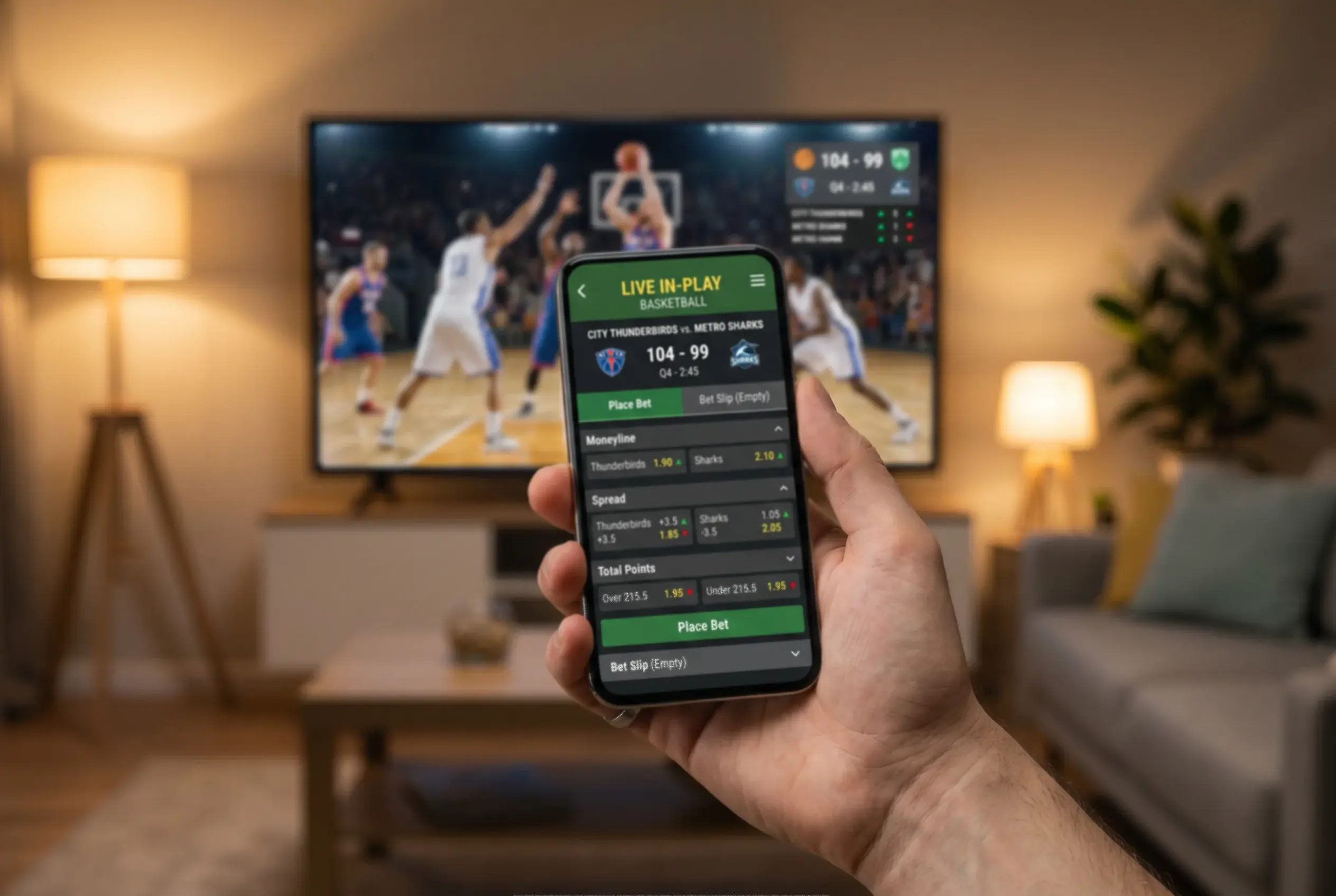
The single most expensive bet I ever made was an in-play three-team parlay on a Tuesday night NBA card while I was streaming the game on a feed that turned out to be running about 30 seconds behind the actual play. I was betting on a Steph Curry three-point line in real time, except it was not real time at all – the shot had already missed by the time I confirmed the slip. The bookmaker had not yet suspended the market because they were running on a tighter feed than mine. That was a £350 lesson in broadcast latency, and it permanently changed how I approach NBA in-play.
Live betting on the NBA in the UK is genuinely lucrative for punters who treat it with discipline, and genuinely brutal for punters who treat it as a casual screen-tap activity. The mechanics matter, the latency matters, and the rules you set for yourself matter more than your read on any individual basket.
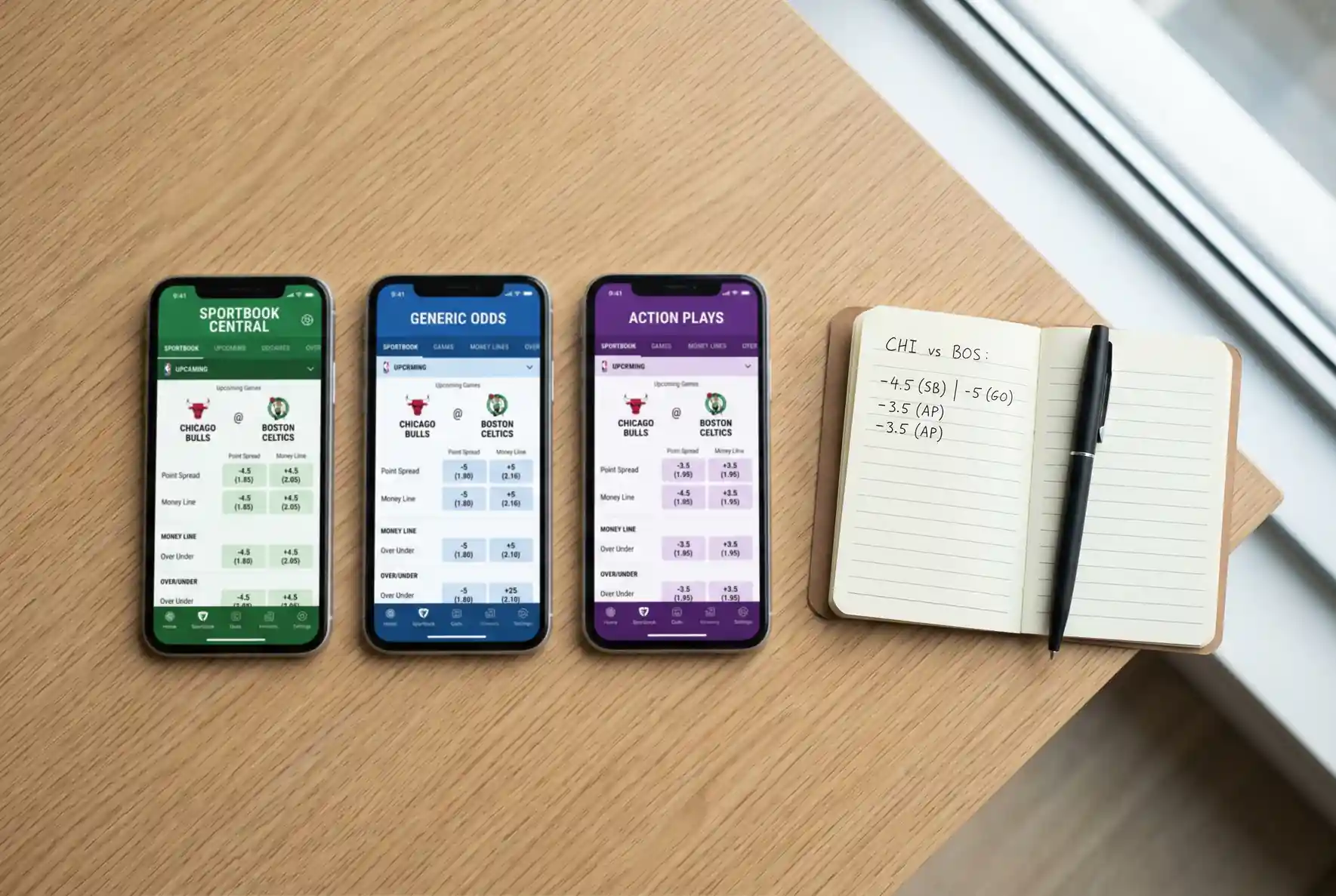
When betting in-play, understanding the nuances of NBA quarter betting lines can help you capitalize on early momentum shifts.
The Growth of In-Play NBA Betting Markets
Live betting accounts for somewhere between 52 and 60 percent of all sports-betting handle in mature European markets, and basketball is one of the sports best suited to in-play action. The game has natural pauses every couple of minutes, the score updates constantly, momentum shifts are visible, and there are dozens of micro-markets running simultaneously alongside the main spread and total.
That structure is why operators have invested so heavily in NBA in-play product. A UK punter who watches a full NBA game now has access to spreads that update every 30 seconds, totals that refresh play-by-play, quarter-winner markets, race-to-X markets, player-specific in-game props, and same-game live parlays. The number of available bets per game on a major UK operator’s NBA page has roughly tripled in the last four years.
The growth in supply has not been matched by growth in pricing sharpness across the board. The major operators run sophisticated trading models on the spread and total, but the secondary markets – quarter winners, race-to-X, player-game props – are often priced by automation that lags the actual game state. That is where in-play edge exists, and it is what makes UK NBA in-play one of the few segments where a recreational bettor can still beat the market with discipline.
The mobile share matters here too. Mobile betting accounts for 78 percent of online wagering globally, and the in-play interface on a mobile app is designed for fast, repeated tapping. The friction is low, which is good for operator revenue and bad for casual punter bankrolls. The discipline rules I will get to in a minute exist because the interface is engineered to bypass discipline.
The Latency Problem for UK Streams
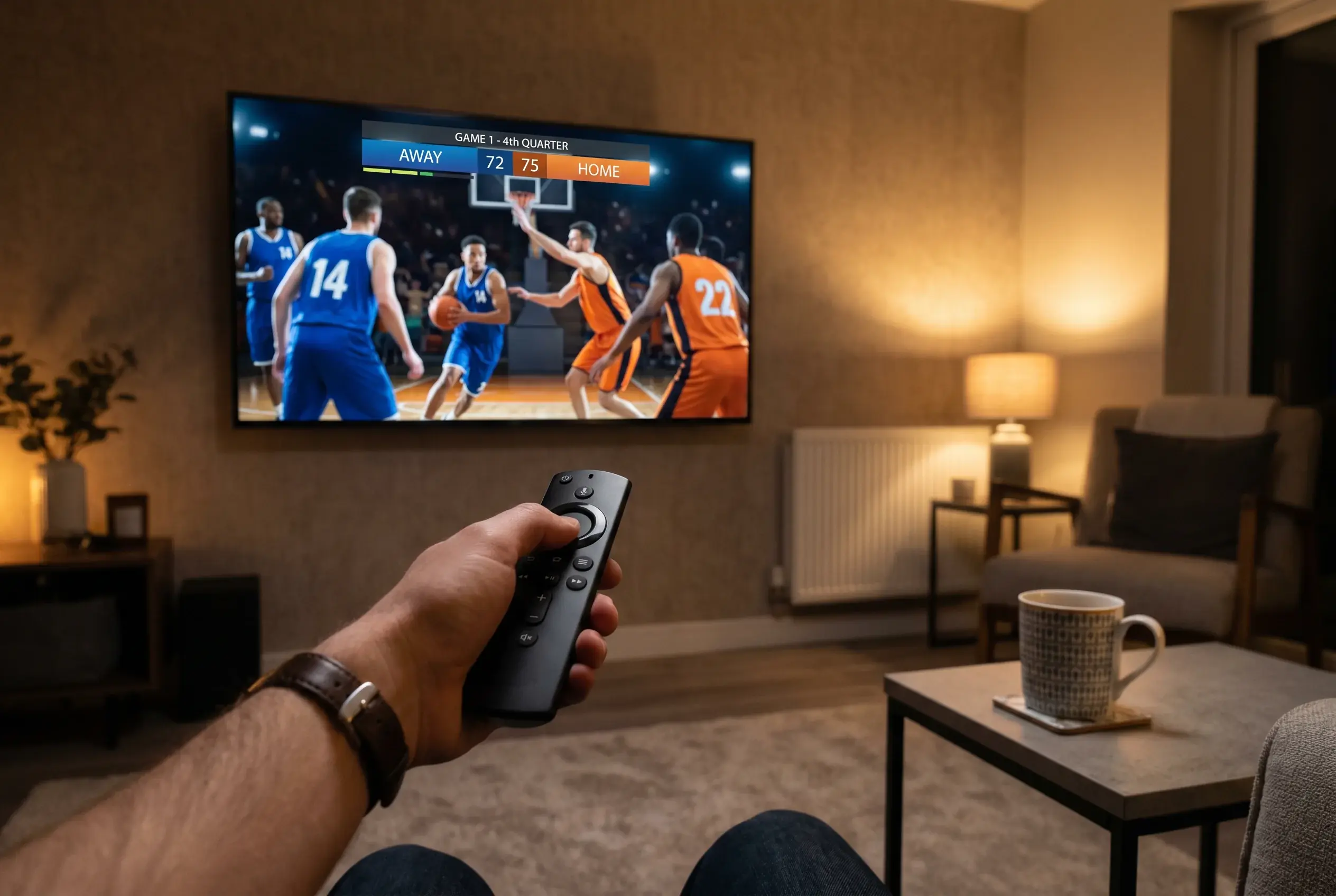
Every stream has latency. The question is how much, and whether you know it. UK NBA viewing latency runs roughly in this range, in my experience: official rights holders like Prime Video and Sky run 8 to 15 seconds behind live action, League Pass runs 15 to 30 seconds behind, and unofficial streams run anywhere from 30 seconds to several minutes behind depending on how the feed is being routed.
The sportsbook is running on a different feed entirely. Operators source data from official league data providers and from their own integrity monitoring partners, and that data flows into the trading model often within one to two seconds of the actual play. When you are sitting on a 15-second viewing delay and the operator’s model is on a 2-second data feed, the operator knows what happened 13 seconds before you do.
This is what creates the asymmetric trap of in-play betting. You see Curry rise for a three. You decide to bet on the next possession’s outcome. By the time you have tapped through and confirmed, the next two possessions have already happened on the operator’s side, and the line you locked in may already have been moved or suspended. If the bookmaker is faster than your stream, you are betting on a game state that has already evolved past you.
The defensive rule I have settled on is simple. I never bet in-play unless I can verify my latency to within five seconds. The verification is a quick check at the start of every game – I look at the game clock on my screen, refresh the operator’s page, and compare the game clock the operator shows. If the gap is under five seconds, I am willing to bet between possessions. If it is over five seconds, I either accept the broadcast risk consciously or stick to bets that do not depend on the next play.
The other defensive layer is bet timing relative to the broadcast. Bets placed during dead-ball situations – after a made basket, during a timeout, between free throws – are inherently less exposed to latency risk because the next event is delayed by the natural game flow. Bets placed during live action, with the ball in play, are where the latency bites hardest. The discipline of waiting for a dead-ball window is annoying when you have a read you want to fire immediately, but it eliminates the worst category of in-play loss.
Quarter Winners, Race-to-X, and Other Micro Markets
The micro-market structure of NBA in-play is where the analytical work pays off. The headline markets – total, spread, moneyline – are tight because operators trade them carefully. The secondary markets are where the pricing slips.
Quarter winners are the most reliable micro-market for finding value. The line on who wins the next quarter often reflects the current game state – which team is leading, which way momentum is flowing – more than it reflects the actual probabilities. A team that is down 8 points at the end of Q2 but has its full starting unit in the locker room about to play the third quarter is often priced as if the deficit predicts the next quarter, when in fact the reset of the substitution pattern is the more relevant variable.
Race-to-X markets – first team to 20 points, first team to 60 points, and so on – are pace-sensitive and matchup-sensitive in ways that automated pricing often misses. A team that is leading by 7 at the moment the market is priced for race-to-80 might be at a structural disadvantage if their playmaker has just gone to the bench. The line gets recalibrated after the substitution, but the window between the substitution and the recalibration is where the price is wrong.
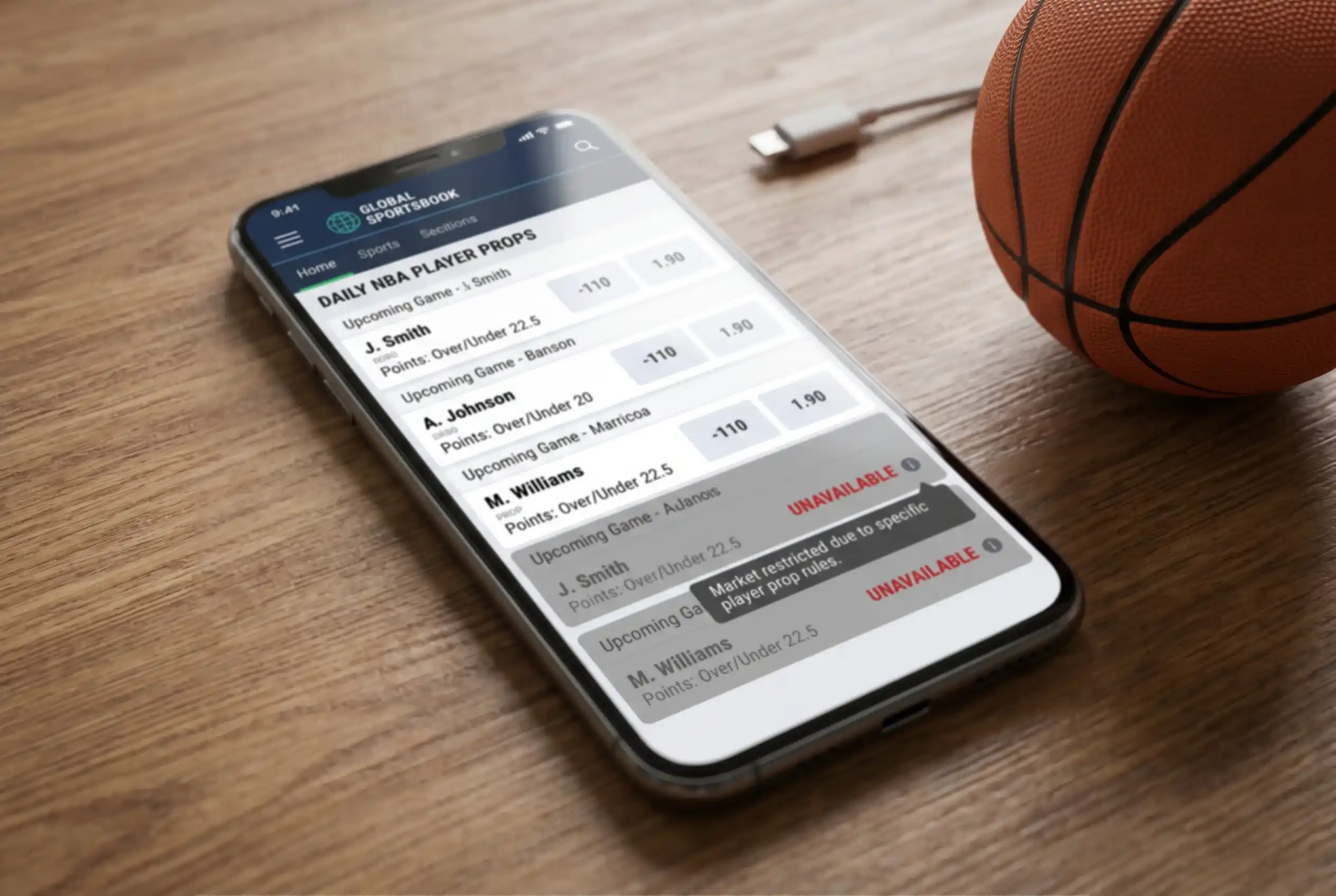
Player in-game props are the most complex micro-market category. The line on a player’s final points moves continuously as the game progresses, and the operator’s algorithm needs to balance their pre-game projection against the actual trajectory of points scored to date. When a player is hot – say, 18 points through Q2 against a projected 22 – the line moves upward, but rarely far enough to reflect the realistic projection. A player on pace for 36 in a 22-point projected game is being undersold if his hot start reflects a genuine matchup advantage rather than random variance.
The other markets I rarely touch in-play are alternative spreads and totals, which are typically priced too sharply to offer value, and proposition bets like “next basket” or “next three-pointer,” which are essentially coin flips with substantial vig baked in. The micro-markets where I focus are quarter winners and player props on stars who are demonstrating clear performance trends through the first half.
Three Rules That Keep In-Play Profitable
I have boiled my in-play discipline down to three rules that I treat as non-negotiable. Breaking any of them is the precondition for the kind of in-play loss that ruins a week.
Rule one is the bankroll cap. I set a maximum in-play wager size at one-third of my standard pregame unit. If my standard pregame stake is £25, my in-play max is £8. The reason is variance – in-play decisions are made on partial information under time pressure, and the variance of those decisions is structurally higher than pregame variance. Smaller stakes match the higher variance and protect the bankroll from compounding small losses into a hole that requires a full session to climb out of.
Rule two is the latency check. I verify my broadcast latency before placing any in-play bet, every session. The check takes 20 seconds. If I cannot verify it – if the stream is buffering, if I am watching on a delayed source, if I am not in front of the broadcast at all – I do not place in-play bets that night. There is no exception to this rule. It exists because the worst category of loss is the latency loss, and the only defence is consistent verification.
Rule three is the dead-ball window. I place in-play bets only during natural game pauses – after made baskets, during timeouts, between free throws, between quarters. The window from ball-in-play to next-play is when latency bites hardest, and avoiding it eliminates the most expensive failure mode of in-play betting. The cost is that I sometimes miss a price I wanted; the benefit is that I never lose a bet because I was watching a play that had already concluded.
Those three rules, applied without exception, are what turn in-play from a casino-style trap into a real betting craft. The micro-markets I described are where the value lives, but the value is only accessible to bettors who do not bleed out through the structural pitfalls before they get to the value.
For real-time updates and expert analysis, always check the top UK NBA betting guide before tip-off.
The Pace That Frames Every In-Play Decision
The most important variable in any NBA in-play bet is pace – possessions per game – and reading pace correctly is the difference between a sharp in-play call and a guess. A game projected for 110 possessions but running at 118 through the first half has been faster than expected, which means the totals lines need recalibration and the player props are tracking higher than baseline. The operator’s algorithm makes some of this adjustment automatically but not all of it, and the gap is where the cleaner in-play bets sit.
Reading pace in real time becomes a habit. The shot clock running down to single digits frequently means slow, deliberate offence and lower-than-projected totals. Fast outlets after rebounds, frequent transition baskets and short possessions mean elevated pace and totals trending over. Once you can read pace by feel rather than waiting for the box score to confirm it, the in-play board starts to look very different – full of mispriced lines that the algorithm is still catching up to. The deeper relationship between pace, possessions and total-bet decisions sits in my quarter betting guide.
It can be, but only with strict discipline around bankroll cap, latency verification and dead-ball windows. Casual punters who treat in-play as entertainment typically lose to the structure of the product. Casual bettors who apply the three rules consistently and focus on micro-markets like quarter winners can absolutely turn a profit across a season. Quarter winners are the cleanest entry point. The decision frame is short – under 12 minutes – the data is rich, and the pricing is forgiving enough to allow learning without ruinous variance. Player props in-game are next, but they require deeper pre-game preparation to bet well.Is NBA in-play betting profitable for casual bettors?
What is the safest in-play market to start with?
Written by the editors at nba Betting Expert.