NBA Back-to-Back Betting: Schedule Fatigue Strategy
 Available in US
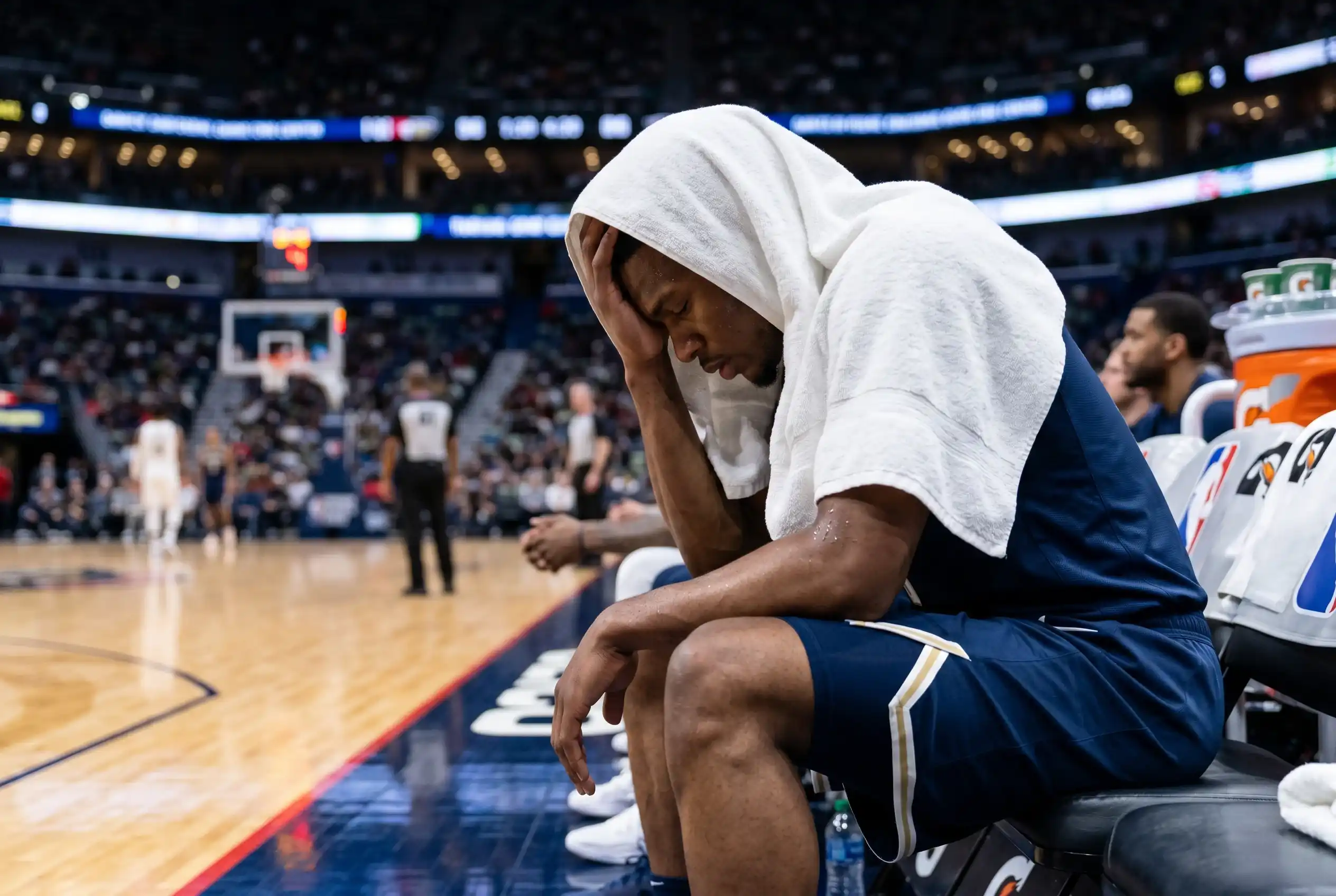
The first NBA bet I ever placed for real money – not pocket-change stakes, actual rent-affecting money – was on a Tuesday night under on a road team playing the second of a back-to-back. The total cleared by eleven points. I felt like a genius. It took me another two seasons to realise I had not been a genius, I had stumbled into one of the most consistent structural edges in the entire NBA season, and I had not even known it had a name.
Back-to-back games – two NBA games in two consecutive calendar days, often in two different cities – are the place where schedule fatigue meets betting markets that price too slowly. The pattern is real, it is measurable, and it is one of the very few NBA edges that has survived nine years of model refinements by the sportsbooks.
Statistical Impact of NBA Player Fatigue
I went through my logs from the 2023-24 season and pulled every back-to-back where the team on the second night was on the road. 174 games. Their average point total – the team alone, not the combined game total – was 4.1 points below their season-long road average. Their three-point percentage dropped by about 2.7 percentage points. Their pace, the number of possessions per 48 minutes, dropped by about 1.4 possessions per game.
Those numbers do not sound dramatic in isolation. Stack them together and the implications for totals betting are significant. A team playing the second of a back-to-back on the road generates fewer possessions, scores at a lower rate per possession, and tends to fall behind early – which often leads to garbage time minutes that further depress the total. In the same data, the combined game total cleared the under at a rate roughly 6 percentage points above the season baseline.
The other tell is the rebounding gap. Tired legs miss more shots, but they also fail to crash the offensive glass with the same intensity. Second-night-of-back-to-back teams produced an offensive rebound rate about 1.8 percentage points below normal. Fewer second chances means fewer points means more unders. The pattern is mechanical.
Basketball claims roughly 28 percent of all US sports-betting handle now, and a meaningful portion of the volume on any given Tuesday night runs through back-to-back games where the public is betting blind to the schedule. That mismatch – public betting overs because they want offence, lines lagging the structural fatigue – is what keeps the edge alive even after years of public discussion.
Load Management and DNP-Rest Risk
The pattern above is the gross average, and it hides a critical second-order risk that has reshaped the betting landscape over the last five years. Coaches now actively manage star minutes around back-to-backs, and increasingly, they sit stars entirely on the second night.
This is the load-management era. When the Lakers play Tuesday in Phoenix and Wednesday in Sacramento, the question is no longer just whether LeBron will be tired – it is whether he plays at all. The sportsbook books this risk into the opening line, but imperfectly. The line on a back-to-back game with a star questionable will sit somewhere between the “star plays” and “star sits” price, and the resolution arrives only when the official report drops a couple of hours before tip-off.
This is why I treat back-to-backs differently now than I did five years ago. I no longer fire blind on the under at the opening number. I wait for the injury report, identify whether the team is treating the second night as a competitive game or a development opportunity for the rotation, and only then commit to a side. The pattern of fatigue is real; the unpredictability of who actually takes the floor is a second variable that did not exist with the same severity a decade ago.
Adam Silver has been public about the league’s frustration with this dynamic. The 65-game rule was the NBA’s attempt to push back against load management for award eligibility, and it has nudged some stars toward playing more back-to-backs than they otherwise would have. The market has not fully repriced for that change yet, which is where current edge exists. A team whose star sat 14 back-to-backs last season but is now only sitting 6 – because award eligibility is on the line – is a team whose unders are being mispriced based on outdated assumptions.
Basketball makes up around 14.2 percent of online sports-betting revenue worldwide, and the load-management nuance is one of the chunks of that revenue that operators have been late to model accurately.
Cross-Country Travel and West-to-East Penalties
The back-to-back effect is not uniform. The geography matters, and the direction of travel matters more.
A team playing in Phoenix on Tuesday and Sacramento on Wednesday has it relatively easy – short flight, no time zone shift. A team playing in Boston on Tuesday and Denver on Wednesday has lost three hours of sleep effectively, given the time zone shift and the flight duration after a 10pm Eastern tip-off that ended around midnight. The body clock matters and the data backs this up.
West-to-east trips after a late tip-off are the most punishing combinations. Teams flying overnight in that direction lose meaningful sleep and arrive in cities where the game tips off two hours earlier on the local clock than they are used to. Their offensive efficiency drops by another 1 to 2 points per 100 possessions on top of the baseline back-to-back penalty. The combined game total in those specific situations clears the under at rates closer to 58 to 60 percent in my own tracking.
The flip side – east-to-west travel after a back-to-back – is less punishing because the body clock works in the team’s favour. They arrive in a time zone where they have more apparent rest, and the game tips off later relative to their internal clock. The fatigue effect is still there, but the magnitude is smaller, and the betting edge correspondingly thinner.
The practical rule I use: if a team is on the second night of a back-to-back, on the road, and crossed two or more time zones travelling eastward, the under on the game total is automatically on my shortlist for that night. I will not bet it without checking the injury report and looking at the line, but it earns the first slot on my evaluation list.
Where the Schedule Edge Lands: Totals, Not Sides
Most casual punters who learn about back-to-back fatigue immediately try to bet the spread or the moneyline against the tired team. The data does not support this nearly as much as it supports betting unders. There are two reasons.
First, the opponent on the rested side knows they are facing a tired opponent and often plays slower, more deliberately, leveraging their advantage by running set offence instead of pushing pace. Both teams therefore generate fewer possessions, which makes the game lower-scoring without necessarily widening the margin. The under hits; the spread does not move as predictably.
Second, NBA games are decided in the fourth quarter, and tired teams have a habit of competing late through sheer professional pride even when their early-game performance was poor. The spread gets covered or backdoored more often than the under loses, simply because garbage-time scoring evens out the totals less effectively than it covers spreads.
The other place the schedule edge sometimes shows up is in player props – specifically, lower props for stars on the second night who play reduced minutes. But this market has tightened considerably since the October 2025 prop scandal forced operators to scrutinise prop pricing more carefully, and the easier edges that existed two years ago are mostly gone. The cleaner play remains the team total under and the game total under.
One last note before I send you off to dig deeper. The relationship between back-to-back fatigue and star availability is where the real money sits now. Load management decisions move the line in ways that schedule fatigue alone does not, and the operators who model load management well have closed many of the easier back-to-back edges. The full architecture of how star rest reshapes betting markets lives in my load management article, which I would line up next if this piece interested you.
Reading the Schedule Like a Spreadsheet
The discipline that turns this edge into reliable profit is reading the NBA schedule weekly, identifying every back-to-back, and noting which teams are travelling and how far. I do this every Sunday afternoon for the upcoming week. Twenty minutes of work produces a shortlist of typically three to six games where the structural conditions for an under play exist. By Wednesday night I have already evaluated half of them and either fired, passed, or set an alert for the injury report.
This is not glamorous betting. It is the bookkeeper’s version of an NBA strategy. But it pays consistently because the conditions repeat, the market underprices them slightly, and the bettors who do the weekly schedule review are still a minority of the punter population. As long as that remains true, the edge will be there to harvest.
Most NBA teams play between 14 and 16 back-to-back sets per season – roughly 28 to 32 total back-to-back games per team across the 82-game schedule. The league has gradually reduced the number compared to a decade ago, but they remain a regular feature, especially during the busiest weeks of February and March. If you cannot get the injury report before tip-off, I would lean toward passing rather than guessing. The structural under edge exists, but it can be obliterated by a star sitting unexpectedly – in either direction. Without the injury data you are betting on an outdated picture of who is playing.How often do NBA teams play back-to-backs during a regular season?
Should I avoid back-to-back games entirely if I cannot check the injury report in time?
Written by the editors at nba Betting Expert.